
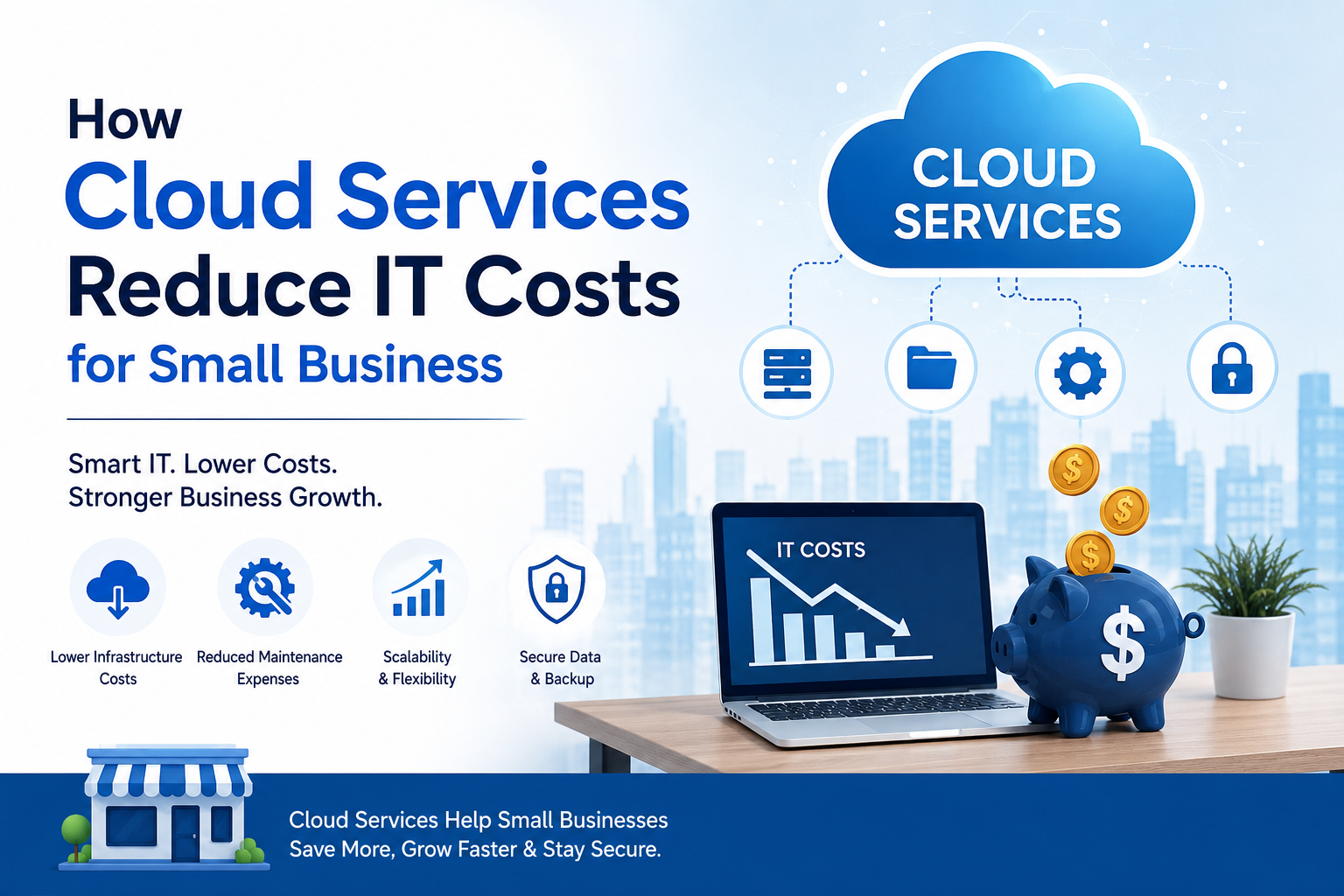

In today’s competitive business environment, managing IT expenses is one of the biggest challenges for small businesses. Limited budgets often make it difficult to invest in expensive servers, software licenses, maintenance, and dedicated IT teams. Fortunately, cloud technology has transformed how businesses access and manage their IT infrastructure. Cloud Services for Small Business provide an affordable, flexible, and scalable solution that helps organizations reduce operational costs while improving productivity and security.
Instead of investing heavily in physical infrastructure, businesses can use cloud platforms to access applications, storage, computing power, and collaboration tools over the internet. This shift from traditional IT infrastructure to cloud-based services allows companies to pay only for the resources they actually use. As a result, businesses can focus more on growth and innovation rather than maintaining costly hardware.
Understanding Cloud Services for Small Business
Cloud services refer to computing resources delivered over the internet instead of being hosted on local computers or servers. These services include cloud storage, virtual servers, software applications, backup solutions, databases, networking, and security services.
For small businesses, cloud computing eliminates the need to purchase expensive equipment or maintain dedicated server rooms. Everything is managed by the cloud service provider, allowing businesses to access their data and applications securely from anywhere with an internet connection.
Whether it is managing customer information, running accounting software, storing business documents, or hosting websites, cloud services provide an efficient and cost-effective alternative to traditional IT infrastructure.
Why Traditional IT infrastructure is expensive
Many small businesses begin with on-premise IT systems because they believe owning hardware offers better control. However, maintaining physical infrastructure often becomes increasingly expensive as the business grows.
High initial hardware investment
Traditional IT environments require businesses to purchase servers, networking devices, storage systems, backup equipment, and software licenses before operations even begin. These upfront investments consume a significant portion of a small company’s budget.
Unlike traditional infrastructure, Cloud Services for Small Business eliminate these capital expenses by providing computing resources through monthly or annual subscription plans.
Continuous maintenance costs
Owning servers also means paying for maintenance, repairs, hardware replacements, electricity, cooling systems, and software updates. Businesses often need dedicated IT professionals to monitor and maintain these systems, increasing long-term operational costs.
Cloud providers handle infrastructure maintenance, allowing business owners to avoid unexpected repair expenses.
Technology becomes outdated quickly
Technology evolves rapidly. Servers and software that perform well today may become outdated within a few years, forcing businesses to invest in upgrades.
Cloud providers continuously update their infrastructure, enabling businesses to benefit from the latest technologies without purchasing new hardware.
How Cloud Services help Small Businesses reduce IT costs
Cloud computing offers several financial advantages that significantly lower overall IT spending.
Eliminating capital expenditure
One of the biggest advantages of Cloud Services for Small Business is the removal of large upfront investments. Businesses no longer need to purchase expensive servers or networking equipment.
Instead, cloud resources operate on a pay-as-you-go pricing model. Companies only pay for the storage, computing power, or applications they actually use, making budgeting much easier.
Lower infrastructure maintenance costs
Maintaining physical infrastructure involves regular hardware servicing, operating system updates, security patches, and backup management.
Cloud providers perform these maintenance tasks automatically, reducing the need for in-house IT staff and minimizing downtime caused by system failures.
Reduced software licensing expenses
Many business applications are now available as Software as a Service (SaaS). Instead of purchasing costly perpetual software licenses, businesses subscribe to applications on a monthly basis.
This approach reduces licensing costs while ensuring users always have access to the latest software versions and security updates.
Flexible resource scaling
Business requirements rarely remain constant throughout the year. During seasonal demand, businesses may require additional storage or computing power, while quieter periods require fewer resources.
Cloud platforms allow organizations to increase or decrease resources instantly without purchasing additional hardware. This flexibility prevents overspending on unused infrastructure.
Improving employee productivity through Cloud Computing
Reducing IT costs is only one advantage of cloud technology. Cloud services also improve workforce efficiency.
Remote access to Business Applications
Employees can securely access business applications, documents, and customer information from any location.
Whether working from home, traveling, or meeting clients, staff members remain connected to essential business systems without requiring complex VPN configurations or physical office access.
Better team collaboration
Cloud-based collaboration tools enable employees to work on shared documents in real time.
Instead of sending multiple email attachments, team members can edit, review, and manage files together, improving communication while reducing version-control issues.
Faster deployment of new applications
Installing software across multiple computers traditionally requires significant time and technical expertise.
Cloud applications can often be deployed within minutes, enabling businesses to adopt new tools without lengthy installation processes or infrastructure upgrades.
Enhancing data security without increasing costs
Small businesses often assume cloud environments are less secure than local servers. In reality, leading cloud providers invest heavily in cybersecurity technologies that many small businesses cannot afford independently.
Automatic security updates
Cloud providers regularly install security patches, operating system updates, and software improvements automatically.
Businesses remain protected against newly discovered vulnerabilities without relying on manual updates.
Advanced data backup
Accidental file deletion, hardware failure, or ransomware attacks can result in major financial losses.
Cloud platforms automatically create backups and replicate data across multiple locations, helping businesses recover quickly after unexpected incidents.
Strong access controls
Modern cloud services include role-based permissions, multi-factor authentication, encryption, and activity monitoring.
These features help protect sensitive business information while reducing the costs associated with implementing enterprise-grade security solutions on-premise.
Reducing disaster recovery expenses
Creating a disaster recovery infrastructure using physical servers can be expensive.
Cloud providers offer built-in disaster recovery solutions that automatically replicate business data across geographically distributed data centers. If one server experiences problems, workloads can continue operating from another location with minimal disruption.
This significantly lowers business continuity costs while improving operational resilience.
Supporting business growth without major investments
Growth often requires additional computing resources, storage, software, and networking infrastructure.
Cloud Services for Small Business allow organizations to expand gradually without making large capital investments. Businesses can add users, increase storage, or launch new applications whenever required, ensuring IT infrastructure grows alongside business needs.
This scalability helps organizations remain competitive while maintaining predictable operating expenses.
Choosing the right Cloud Services for Small Business
Selecting the appropriate cloud solution requires careful evaluation of business goals and future growth plans.
Assess current business requirements
Businesses should first identify which applications, workloads, and business processes will benefit most from cloud migration. Understanding existing infrastructure helps determine the right deployment strategy.
Consider security and compliance
Organizations handling sensitive customer or financial information should choose providers that offer strong encryption, identity management, backup capabilities, and compliance certifications relevant to their industry.
Evaluate pricing models
Cloud providers offer different pricing structures based on storage, computing resources, bandwidth, and software subscriptions.
Comparing pricing models helps businesses choose a solution that balances performance with affordability.
Plan for future scalability
Business needs evolve over time. Choosing a cloud platform capable of supporting future expansion prevents expensive migrations later.
A scalable cloud environment enables businesses to add services, users, and storage without replacing their existing infrastructure.
Common Industries Benefiting from Cloud Services
Businesses across multiple industries are reducing operational expenses through cloud adoption.
Retail companies use cloud platforms to manage inventory, online stores, and customer data. Healthcare providers securely store patient records while improving collaboration among medical professionals. Manufacturing businesses monitor production systems through cloud-connected applications, while professional service firms rely on cloud-based accounting, customer relationship management, and document management solutions.
Regardless of industry, Cloud Services for Small Business provide greater flexibility while lowering technology costs.
Conclusion
Managing IT infrastructure no longer requires significant financial investment. Cloud Services for Small Business enable organizations to replace expensive hardware, reduce maintenance costs, improve collaboration, strengthen data security, and scale operations without major capital expenditure.
As technology continues to evolve, cloud computing has become an essential strategy for businesses seeking sustainable growth and operational efficiency. By choosing the right cloud solutions and aligning them with business objectives, small businesses can control IT spending while gaining access to enterprise-level technology that supports long-term success.
Frequently Asked Questions (FAQs)
Q1. What are Cloud Services for Small Business?
Cloud Services for Small Business are internet-based IT solutions that provide access to computing resources such as storage, software, servers, databases, and networking without requiring businesses to invest in physical infrastructure. These services help small businesses reduce costs, improve flexibility, and scale operations efficiently.
Q2. How do Cloud Services for Small Business help reduce IT costs?
Cloud services reduce IT costs by eliminating the need for expensive hardware, lowering maintenance expenses, minimizing software licensing costs, and offering a pay-as-you-go pricing model. Businesses only pay for the resources they use, making IT spending more predictable and cost-effective.
Q3. Are Cloud Services secure for small businesses?
Yes. Reputable cloud service providers implement advanced security measures such as data encryption, multi-factor authentication, automatic security updates, regular backups, and continuous monitoring to protect business data from cyber threats and data loss.
Q4. Can small businesses scale their operations with cloud services?
Absolutely. One of the biggest advantages of Cloud Services for Small Business is scalability. Businesses can quickly increase or decrease computing resources, storage, and users based on their changing needs without purchasing additional hardware.
Q5. Which types of small businesses benefit the most from cloud services?
Almost every small business can benefit from cloud services, including retail stores, healthcare clinics, manufacturing companies, professional service firms, educational institutions, startups, and e-commerce businesses. Cloud solutions help improve productivity, collaboration, data security, and overall operational efficiency across various industries.