
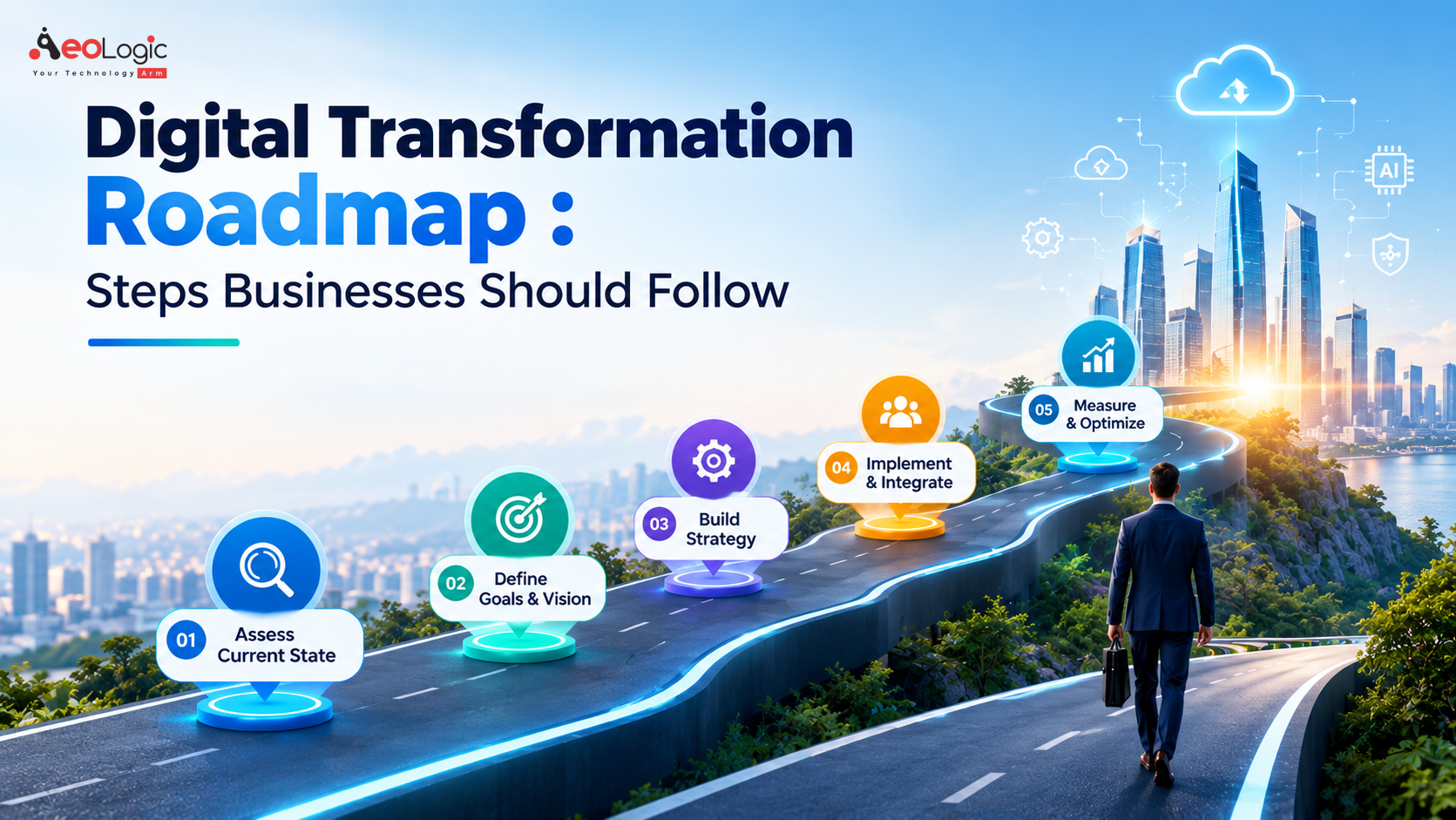

Digital transformation has become an important priority for businesses looking to remain competitive, improve operational efficiency, and respond faster to changing customer expectations. However, transformation is not simply about adopting new software, moving systems to the cloud, or introducing artificial intelligence. It requires a clear understanding of business objectives, existing processes, technology capabilities, workforce readiness, and long-term growth plans. A well-defined Digital Transformation Roadmap helps organizations bring these elements together and create a structured path from their current state to their desired future state.
Businesses often struggle with transformation because they begin investing in technologies before understanding what they actually need to improve. A strategic approach allows organizations to identify gaps, prioritize initiatives, manage investments, and measure progress. Whether a company is modernizing legacy applications, automating workflows, improving customer experiences, or building data-driven operations, having a structured transformation plan can significantly reduce complexity and improve the chances of long-term success.
What is a Digital Transformation Roadmap?
A Digital Transformation Roadmap is a strategic plan that defines how an organization will use digital technologies to improve business processes, customer experiences, employee productivity, and overall performance. It provides a clear direction for moving from the organization’s current technological and operational environment toward a more connected, agile, and digitally enabled future.
The roadmap is different for every organization because transformation priorities depend on business size, industry, existing infrastructure, customer expectations, regulatory requirements, and strategic goals. A manufacturing company may prioritize smart production, IoT, predictive maintenance, and supply chain visibility, while a healthcare organization may focus on digital patient experiences, data security, electronic records, and intelligent workflows.
A successful roadmap therefore begins with business needs rather than technology trends. Technology should support measurable business outcomes instead of becoming the objective itself.
Why Businesses Need a Structured Transformation Strategy
Digital transformation can involve multiple departments, applications, processes, and stakeholders. Without a structured strategy, businesses may end up with disconnected systems, overlapping technology investments, poor adoption, and unclear returns on investment.
A Digital Transformation Roadmap creates alignment between leadership, technology teams, operational departments, and employees. It helps decision-makers understand which initiatives should be addressed first and how individual projects contribute to larger business goals.
A structured approach also makes transformation easier to manage. Instead of attempting to modernize everything at once, organizations can prioritize initiatives based on business value, urgency, complexity, and available resources. This reduces disruption while allowing businesses to demonstrate measurable progress through smaller transformation milestones.
Steps to Build an Effective Digital Transformation Roadmap
Define Business Goals and Transformation Objectives
The first step is to establish what the organization wants to achieve through digital transformation. Businesses should examine their current challenges and determine where technology can create meaningful improvements.
Objectives may include reducing operational costs, improving customer satisfaction, increasing employee productivity, accelerating product development, strengthening data visibility, or creating new digital revenue opportunities. Clear objectives provide a foundation for every subsequent transformation decision.
Instead of setting a broad goal such as becoming a digital business, organizations should establish measurable outcomes. For example, a company may want to reduce manual processing time, improve order accuracy, shorten customer response times, or increase operational visibility. These objectives make transformation easier to evaluate.
Assess the Current Technology and Business Environment
Before introducing new technologies, businesses need to understand their current state. This includes reviewing applications, infrastructure, data systems, workflows, cybersecurity controls, integration capabilities, and legacy platforms.
Organizations should identify which systems are performing well and which ones are creating bottlenecks. Manual processes, duplicate data entry, outdated applications, isolated databases, and limited reporting capabilities can reveal important transformation opportunities.
A detailed assessment also helps organizations identify technical dependencies. Replacing one application may affect several other systems, while modernizing a legacy platform may require data migration or integration work. Understanding these relationships helps businesses plan transformation initiatives realistically.
Identify Gaps and Prioritize Opportunities
Once the current environment is understood, organizations can compare it with their desired future state. This gap analysis highlights areas where business processes, technology, skills, or infrastructure need improvement.
Not every gap needs to be addressed immediately. Businesses should prioritize opportunities based on their potential business impact, implementation effort, cost, risk, and strategic importance.
High-impact initiatives with manageable complexity can often become early transformation projects. These initiatives can generate measurable results while building organizational confidence for larger programs.
Develop a Technology Strategy
The next stage involves selecting technologies that support the identified business objectives. Depending on the organization’s requirements, this could involve cloud computing, artificial intelligence, automation, IoT, data analytics, enterprise applications, cybersecurity, mobile technologies, or modern integration platforms.
Technology selection should focus on suitability rather than popularity. A solution that works well for one organization may not be appropriate for another. Businesses should consider scalability, interoperability, security, integration requirements, implementation costs, and long-term maintenance.
A strong Digital Transformation Roadmap connects technology investments directly with business priorities, ensuring that every major technology decision has a clear purpose.
Modernize Legacy Systems and Infrastructure
Legacy systems are one of the biggest barriers to digital transformation for many organizations. Older applications may be difficult to integrate, expensive to maintain, or unable to support modern customer and operational requirements.
Modernization does not always mean replacing every legacy system. Businesses can consider application modernization, cloud migration, API integration, modular architecture, database modernization, or gradual replacement depending on the situation.
A phased modernization strategy can reduce operational disruption. Organizations can modernize critical systems while continuing to operate essential legacy applications until suitable alternatives are ready.
Build a Strong Data Foundation
Data is central to modern business operations. However, organizations often have data distributed across multiple systems, departments, applications, and locations. Poor data quality and limited interoperability can prevent businesses from gaining useful insights.
Transformation initiatives should therefore establish reliable data management practices. Organizations need consistent data standards, secure storage, integration mechanisms, governance processes, and appropriate access controls.
A strong data foundation enables advanced analytics, automation, artificial intelligence, forecasting, and real-time decision-making. Without reliable data, even sophisticated digital technologies may fail to produce meaningful business outcomes.
Focus on Employee and Customer Experience
Digital transformation should improve experiences, not simply introduce new technology. Employees need tools that simplify their work, reduce repetitive tasks, and provide access to relevant information. Customers expect convenient, personalized, responsive, and consistent interactions across digital channels.
Organizations should involve employees and customers when designing transformation initiatives. Understanding real user challenges can help businesses develop solutions that are practical and easier to adopt.
Employee experience is particularly important because technology adoption depends heavily on how comfortable teams are with new systems and processes. A technically successful implementation can still fail if employees do not understand its value or receive sufficient support.
Establish Cybersecurity and Risk Management
As organizations become more digitally connected, cybersecurity becomes an essential part of transformation planning. New applications, cloud environments, connected devices, integrations, and digital channels can create additional security risks.
Security should be incorporated into transformation projects from the beginning rather than treated as an afterthought. Organizations should evaluate identity management, access controls, data protection, application security, monitoring, compliance, and incident response requirements.
A secure transformation strategy helps businesses protect sensitive information while maintaining customer and stakeholder trust.
Create a Phased Implementation Plan
Large-scale transformation should rarely be treated as one massive project. A phased approach allows businesses to manage complexity and learn from early initiatives.
Organizations can divide transformation into short-term, medium-term, and long-term initiatives. Early projects can focus on high-value improvements that demonstrate tangible benefits. Later phases can build on these foundations by introducing more advanced capabilities and integrating systems across departments.
A phased Digital Transformation Roadmap also gives leadership greater visibility into budgets, timelines, risks, dependencies, and expected outcomes.
Measure Performance and Continuously Improve
Transformation does not end when a new system goes live. Businesses need to monitor whether initiatives are producing the expected results and identify areas that require improvement.
Key performance indicators can include operational efficiency, process completion time, customer satisfaction, system adoption, cost savings, revenue growth, data accuracy, and productivity improvements. The appropriate metrics depend on the organization’s transformation objectives.
Regular reviews allow businesses to adjust priorities as market conditions, customer expectations, and technologies evolve. Continuous improvement should therefore remain an important part of the transformation strategy.
Common Challenges Businesses Face During Transformation
Despite the potential benefits, digital transformation can be challenging. Resistance to change is one of the most common barriers because employees may be comfortable with existing processes or uncertain about new technologies.
Legacy infrastructure, limited budgets, skills shortages, fragmented data, integration complexity, and unclear leadership priorities can create additional obstacles. Businesses may also struggle when different departments pursue separate digital initiatives without a shared strategy.
Strong leadership, transparent communication, employee involvement, realistic planning, and measurable objectives can help organizations overcome these challenges. Transformation should be treated as an organizational change program rather than only an IT initiative.
How Businesses Can Make Transformation More Sustainable
Sustainable transformation requires organizations to build capabilities that support long-term digital growth. This includes developing internal technology skills, establishing effective governance, maintaining flexible architectures, and regularly reviewing technology investments.
Businesses should also create a culture that encourages experimentation and continuous improvement. Teams need the freedom to identify inefficiencies, test better approaches, and learn from both successful and unsuccessful initiatives.
The Digital Transformation Roadmap should therefore remain flexible rather than becoming a fixed document. As business priorities and technologies change, organizations should be prepared to update their transformation initiatives accordingly.
The Role of Technology Partners in Digital Transformation
Many businesses lack the internal resources required to plan and execute complex transformation programs. Technology partners can provide expertise across areas such as application modernization, cloud computing, AI, automation, data analytics, cybersecurity, IoT, enterprise software, and system integration.
The right partner can help organizations assess their existing environment, define priorities, design technology architecture, implement solutions, and measure outcomes. More importantly, a technology partner can help connect individual digital initiatives with broader business objectives.
Organizations should evaluate potential partners based on technical expertise, industry understanding, implementation capabilities, scalability, security practices, and their ability to provide long-term support.
Future of Business Transformation
The next phase of business transformation will increasingly involve intelligent automation, artificial intelligence, connected systems, real-time analytics, and more adaptive digital platforms. Organizations will move beyond simply digitizing existing processes and begin redesigning operations around intelligent technologies.
AI-powered decision support, autonomous workflows, predictive analytics, digital twins, edge computing, and connected enterprise platforms are expected to influence how businesses operate and compete. However, technology adoption will continue to require strong governance, reliable data, skilled employees, and clear business objectives.
Companies that continuously evaluate their processes and invest strategically will be better positioned to respond to emerging opportunities.
Conclusion
A successful transformation journey begins with a clear understanding of where a business stands and where it wants to go. Organizations need to define measurable objectives, assess existing systems, identify gaps, prioritize opportunities, modernize infrastructure, strengthen data capabilities, improve user experiences, and establish strong security practices.
A well-planned Digital Transformation Roadmap provides the structure businesses need to manage these activities while keeping technology investments aligned with strategic goals. Rather than treating transformation as a one-time technology project, organizations should view it as a continuous journey focused on improving efficiency, agility, innovation, and customer value.
With the right strategy, leadership commitment, technology foundation, and continuous improvement mindset, businesses can turn digital transformation from a complex initiative into a sustainable competitive advantage.
FAQs
Q1. What is a Digital Transformation Roadmap?
A Digital Transformation Roadmap is a strategic plan that outlines how a business can adopt digital technologies to improve processes, customer experiences, employee productivity, and overall business performance. It helps organizations define goals, identify technology gaps, prioritize initiatives, and establish a structured path for long-term digital transformation.
Q2. Why is a Digital Transformation Roadmap important for businesses?
A Digital Transformation Roadmap gives businesses a clear direction for their digital initiatives. It helps align technology investments with business objectives, reduce unnecessary spending, prioritize high-impact projects, manage risks, and measure transformation progress. This structured approach also helps organizations adapt to changing market and customer expectations.
Q3. What are the key steps in creating a Digital Transformation Roadmap?
Creating a Digital Transformation Roadmap generally involves defining business goals, assessing existing systems and processes, identifying technology gaps, prioritizing transformation opportunities, selecting suitable technologies, strengthening data and cybersecurity, planning implementation phases, and establishing performance metrics.
Q4. How long does digital transformation take?
The timeline varies depending on the organization’s size, industry, existing infrastructure, transformation goals, and project complexity. Some initiatives, such as workflow automation or application integration, can deliver results within months, while larger programs involving legacy modernization, cloud migration, or enterprise-wide transformation may take several years.
Q5. How can businesses measure the success of digital transformation?
Businesses can measure transformation success through metrics such as operational efficiency, cost reduction, employee productivity, customer satisfaction, process completion time, technology adoption, revenue growth, data quality, and return on investment. Regular performance reviews help organizations refine their strategy and ensure transformation initiatives continue delivering business value.