
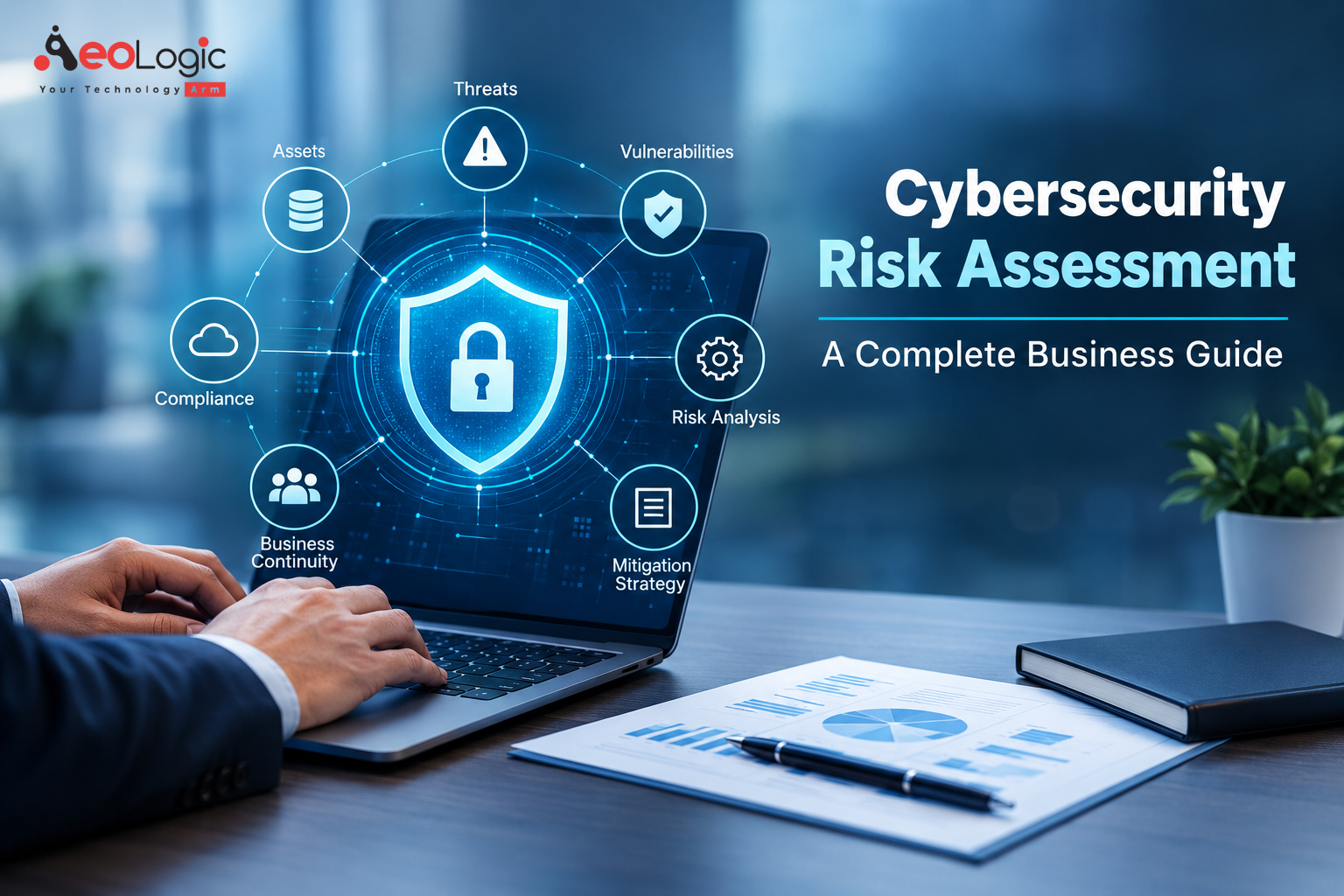

As businesses become increasingly dependent on cloud platforms, digital applications, connected devices, and online services, cybersecurity has become a core business responsibility rather than only an IT concern. Organizations now manage large volumes of customer information, financial records, intellectual property, employee data, and operational systems that can be targeted by cybercriminals. A single security weakness can lead to data exposure, financial losses, operational disruption, regulatory penalties, and long-term damage to customer trust. A Cybersecurity Risk Assessment provides businesses with a structured way to understand their security exposure and determine where improvements are required.
Instead of reacting to threats after an incident occurs, organizations can identify vulnerabilities, evaluate potential business impact, and establish appropriate security controls in advance. This approach allows security teams and business leaders to make informed decisions about technology investments, risk reduction, compliance, and business continuity.
What is a Cybersecurity Risk Assessment?
A Cybersecurity Risk Assessment is a systematic process used to identify an organization’s digital assets, potential threats, vulnerabilities, and associated business risks. It examines how likely a security incident is to occur and what consequences the organization could face if that incident happens.
The assessment generally considers applications, networks, cloud infrastructure, endpoints, databases, employees, third-party systems, and sensitive information.
The purpose is not simply to discover vulnerabilities. It is to understand which weaknesses could create meaningful business risks and determine how those risks should be addressed. This makes cybersecurity more closely connected with business continuity, operational resilience, compliance, and strategic decision-making.
Why Businesses Need Regular Risk Assessments
Cybersecurity threats continue to change as businesses introduce new technologies and expand their digital operations. Cloud migration, remote work, artificial intelligence, Internet of Things devices, APIs, and third-party integrations can introduce new attack surfaces that were not present when an organization’s original security controls were established.
A one-time assessment therefore cannot provide permanent protection. Regular assessments help organizations identify changes in their technology environment and determine whether existing security controls remain effective.
For growing organizations, periodic assessments can also help security teams prioritize investments. Instead of applying the same level of protection to every system, organizations can focus resources on assets and processes where a security failure could have the greatest consequences.
Key Objectives of Cybersecurity Risk Assessment
The primary objective of a Cybersecurity Risk Assessment is to create a practical understanding of the organization’s security risks. This begins with identifying important assets and determining what information, applications, systems, and infrastructure require protection.
The assessment also evaluates potential threats that could affect these assets. These may include phishing, ransomware, malware, credential theft, insider threats, unauthorized access, application vulnerabilities, supply chain attacks, and other forms of cybercrime.
Another important objective is to determine the potential impact of successful attacks. A compromised system may cause much more than a technical problem. It could interrupt business operations, expose confidential information, affect customers, create regulatory obligations, or result in significant financial losses.
Identifying Critical Business Assets
Organizations cannot protect what they do not understand. Asset identification is therefore an important part of the assessment process. Businesses need to know which systems contain sensitive information, which applications support essential operations, and which infrastructure components are critical to business continuity.
This may include customer databases, payment systems, enterprise applications, cloud environments, employee devices, production systems, communication platforms, and proprietary business information.
Once critical assets have been identified, organizations can determine their security requirements and establish appropriate safeguards.
Understanding Threats and Vulnerabilities
Threat identification focuses on the possible events that could negatively affect an organization, while vulnerability analysis examines weaknesses that could allow those threats to succeed.
For example, an organization may face credential theft as a potential threat while weak passwords, insufficient authentication controls, or exposed login interfaces represent vulnerabilities. Understanding the relationship between threats and vulnerabilities helps security teams determine where preventive measures can provide the greatest value.
How the Cybersecurity Risk Assessment Process Works
A structured Cybersecurity Risk Assessment generally begins with defining the scope of the assessment. Organizations need to establish which systems, departments, applications, locations, and business processes will be evaluated. A clearly defined scope helps ensure that important areas are not overlooked.
The next stage involves identifying assets and collecting information about the technology environment. Security teams may review network architecture, applications, cloud services, access permissions, data flows, endpoints, security policies, and third-party connections.
After the environment is understood, potential threats and vulnerabilities can be evaluated. Technical testing, vulnerability scanning, configuration reviews, security questionnaires, interviews, and documentation analysis may be used depending on the organization’s requirements.
Risk Analysis and Prioritization
Not every vulnerability represents the same level of business risk. A minor weakness in a non-critical system may have limited consequences, while a vulnerability affecting a customer database or financial application could be significantly more serious.
Risk analysis therefore considers factors such as likelihood, potential impact, asset importance, exposure, existing controls, and regulatory requirements. This allows organizations to distinguish between issues that require immediate attention and those that can be addressed through longer-term security improvements.
The result is a prioritized understanding of cybersecurity exposure that can support security planning and investment decisions.
Developing a Risk Treatment Strategy
Once risks have been identified and prioritized, organizations need to determine how each significant risk should be handled. Depending on the situation, a business may reduce the risk through stronger controls, transfer certain risks through insurance or contractual arrangements, avoid risky activities, or formally accept a level of residual risk.
Risk treatment should be aligned with business objectives. Security controls should protect critical systems without unnecessarily preventing employees from performing legitimate business activities.
Common Areas Evaluated During an Assessment
A comprehensive Cybersecurity Risk Assessment can cover multiple layers of an organization’s technology environment. Network security is commonly reviewed to identify weaknesses in connectivity, segmentation, firewalls, remote access, and monitoring.
Application security is another important area, particularly for organizations that operate customer-facing websites, mobile applications, APIs, and enterprise software. Security teams may evaluate authentication, authorization, encryption, input validation, configuration, and application vulnerabilities.
Cloud environments also require careful examination. Misconfigured storage, excessive permissions, weak identity controls, exposed services, and insufficient monitoring can create significant risks when cloud resources are not properly managed.
Identity and Access Management
User access is a critical component of organizational security. Assessments can examine whether employees and third parties have appropriate permissions and whether access is reviewed regularly.
Strong authentication, multi-factor authentication, role-based access, privileged account management, and timely removal of unnecessary permissions can reduce the risk associated with compromised credentials.
Data Protection and Privacy
Sensitive information requires appropriate protection throughout its lifecycle. Businesses should understand where sensitive data is stored, how it moves between systems, who can access it, and how it is protected.
Encryption, access controls, data classification, backup strategies, retention policies, and monitoring can help organizations reduce the possibility and impact of unauthorized data access.
Common Challenges Businesses Face
One of the biggest challenges is maintaining accurate visibility across complex technology environments. Organizations often operate a combination of legacy applications, cloud platforms, third-party services, remote endpoints, and connected devices. Without proper asset visibility, important security gaps may remain unidentified.
Another challenge is balancing security requirements with operational priorities. Businesses need to protect their systems while maintaining productivity and customer experience. Security controls that are poorly designed or implemented without understanding business workflows can create unnecessary friction.
Limited cybersecurity expertise can also make it difficult for smaller organizations to conduct detailed assessments internally. External cybersecurity specialists can provide additional expertise, methodologies, and independent perspectives when internal resources are limited.
Benefits for Business Leadership
A Cybersecurity Risk Assessment gives business leaders a clearer view of how cybersecurity issues could affect organizational objectives. Rather than viewing security as an isolated technical function, leadership can understand the relationship between vulnerabilities, financial exposure, operational continuity, customer trust, and compliance.
The assessment can also support more informed budgeting decisions. When security investments are connected to identified risks and business impact, organizations can better explain why particular technologies, processes, or services require funding.
Another important benefit is improved preparedness. Organizations that understand their critical risks can establish stronger incident response plans, backup strategies, recovery processes, and communication procedures before a major security event occurs.
Supporting Regulatory and Compliance Requirements
Many industries operate under cybersecurity, privacy, and data protection requirements. A structured assessment can help organizations identify security gaps that may affect compliance obligations.
Organizations can then align their security programs with applicable regulatory and industry requirements.
Building a Continuous Security Program
Businesses should therefore establish continuous monitoring and periodic reassessment processes. Vulnerability management, security awareness training, access reviews, penetration testing, configuration monitoring, incident response exercises, and policy updates can complement formal assessments.
Turning Assessment Findings Into Action
The value of an assessment ultimately depends on what an organization does with its findings. Security teams should translate identified risks into practical remediation activities with appropriate ownership and timelines.
Critical vulnerabilities may require immediate remediation, while broader issues such as outdated security policies or insufficient employee awareness may require structured improvement programs.
The Role of Technology in Cybersecurity Risk Management
Modern security technologies can help organizations continuously identify and respond to risks. Security information and event management platforms, endpoint protection, identity management, vulnerability scanners, cloud security tools, and automated monitoring solutions can improve visibility across complex environments.
Artificial intelligence and automation are also increasingly being used to identify unusual behavior, analyze security events, prioritize alerts, and support faster incident response. However, technology should complement rather than replace sound security governance, processes, and human decision-making.
Final Thoughts
A strong cybersecurity strategy begins with understanding the risks an organization actually faces. A Cybersecurity Risk Assessment provides the foundation for identifying critical assets, evaluating vulnerabilities, understanding potential threats, and prioritizing security improvements according to business impact.
Organizations that approach cybersecurity as an ongoing business discipline can become better prepared for changing threats and technology environments. By combining regular assessments with continuous monitoring, strong access controls, employee awareness, effective incident response, and appropriate security technologies, businesses can strengthen resilience while supporting their broader digital transformation goals.
As cyber threats continue to evolve, proactive risk management will remain an important part of protecting business operations, customer information, intellectual property, and long-term organizational value.
Frequently Asked Questions
Q1. What is a Cybersecurity Risk Assessment?
A Cybersecurity Risk Assessment is a structured process that helps businesses identify cybersecurity threats, vulnerabilities, critical assets, and potential business impacts. It enables organizations to understand their security exposure and prioritize appropriate measures to reduce risks.
Q2. How often should a business conduct a cybersecurity risk assessment?
Businesses should conduct assessments regularly and whenever significant changes occur in their technology environment. Cloud migration, new applications, major infrastructure changes, acquisitions, regulatory updates, or significant security incidents can all justify an additional assessment.
Q3. What areas are covered in a cybersecurity risk assessment?
An assessment can examine networks, applications, cloud infrastructure, endpoints, user access, sensitive data, security policies, third-party services, and incident response capabilities. The exact scope depends on the organization’s technology environment, industry, and business requirements.
Q4. What are the benefits of conducting a cybersecurity risk assessment?
A cybersecurity risk assessment helps organizations identify security weaknesses, prioritize remediation efforts, improve security planning, support compliance activities, and prepare for potential incidents. It can also help leadership make more informed cybersecurity investment decisions.
Q5. Can small businesses benefit from cybersecurity risk assessments?
Yes. Small businesses can face significant risks from phishing, ransomware, compromised credentials, data breaches, and third-party vulnerabilities. An assessment can help smaller organizations identify their most important risks and focus limited security resources on areas that require greater protection.