
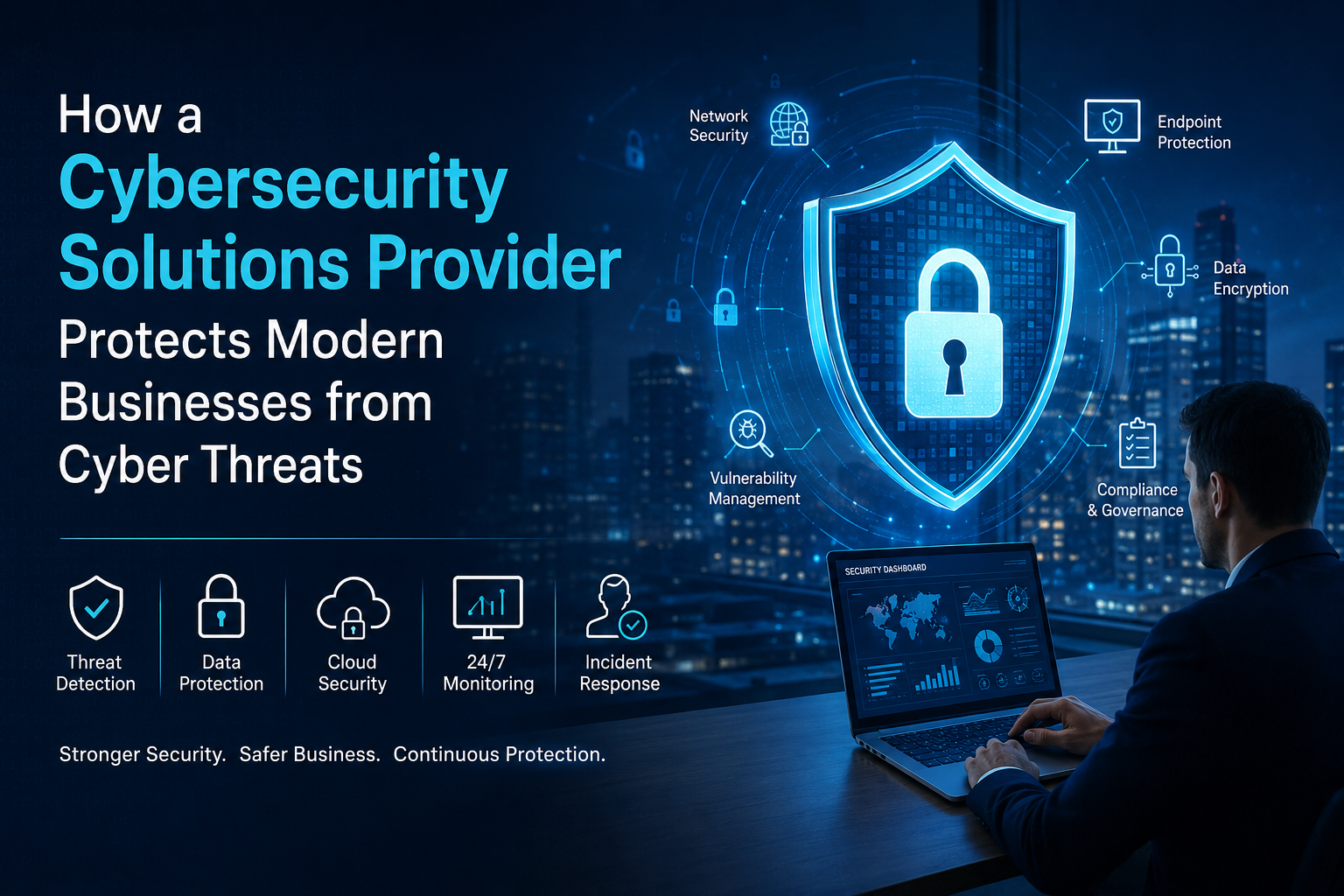

In today’s digital-first business environment, cyber threats have become more sophisticated, frequent, and damaging than ever before. From ransomware attacks and phishing campaigns to insider threats and data breaches, organizations of all sizes face growing cybersecurity challenges. As businesses continue to adopt cloud computing, remote work, IoT devices, and digital transformation strategies, protecting sensitive information and critical systems has become a top priority. This is where a Cybersecurity Solutions Provider plays a vital role. By delivering advanced security technologies, proactive monitoring, and expert guidance, these providers help businesses reduce risks, maintain compliance, and ensure uninterrupted operations.
Understanding the Role of a Cybersecurity Solutions Provider
A Cybersecurity Solutions Provider is a technology partner that helps organizations identify, prevent, detect, and respond to cyber threats. Rather than relying on traditional antivirus software alone, modern cybersecurity providers implement a comprehensive security strategy that protects networks, applications, endpoints, cloud infrastructure, and sensitive business data.
As cybercriminals continue to evolve their attack methods, businesses require continuous monitoring, threat intelligence, vulnerability assessments, and rapid incident response. A trusted cybersecurity provider combines advanced tools with experienced security professionals to deliver end-to-end protection that adapts to changing threat landscapes.
Why Modern Businesses Face Increasing Cyber Risks
Digital transformation has significantly improved business efficiency, but it has also expanded the attack surface for cybercriminals. Organizations now operate across multiple cloud platforms, mobile devices, remote offices, and interconnected applications, creating more opportunities for attackers to exploit security weaknesses.
The Rise of Sophisticated Cyber Attacks
Cyber attacks are no longer limited to large enterprises. Small and medium-sized businesses are increasingly targeted because they often have fewer security resources. Attackers use artificial intelligence, automation, and social engineering techniques to bypass traditional security measures, making prevention more challenging than ever before.
Growing Regulatory and Compliance Requirements
Businesses operating in healthcare, finance, manufacturing, retail, and other regulated industries must comply with various data protection standards. Failure to secure customer information can result in financial penalties, legal consequences, and reputational damage. A cybersecurity provider helps organizations implement security controls that align with industry regulations while protecting critical business assets.
How a Cybersecurity Solutions Provider Protects Businesses
A comprehensive cybersecurity strategy goes beyond installing security software. It requires continuous assessment, monitoring, and improvement to defend against evolving threats.
Continuous Threat Monitoring and Detection
One of the primary responsibilities of a cybersecurity provider is monitoring business networks around the clock. Using Security Information and Event Management (SIEM) platforms, artificial intelligence, and behavioral analytics, suspicious activities can be detected before they become major security incidents.
Real-time monitoring enables security teams to identify unusual login attempts, unauthorized access, malware infections, and network anomalies quickly. Early detection significantly reduces the potential impact of cyber attacks.
Advanced Endpoint Protection
Modern employees use laptops, smartphones, tablets, and remote workstations to access business resources. Every connected device becomes a potential entry point for attackers.
A Cybersecurity Solutions Provider implements advanced endpoint protection that continuously monitors devices, blocks malicious software, identifies suspicious behavior, and automatically isolates compromised systems before threats spread throughout the organization.
Network Security and Access Control
Business networks carry valuable information every second. Protecting network infrastructure requires multiple layers of defense, including firewalls, intrusion prevention systems, secure VPNs, network segmentation, and zero-trust security models.
By limiting user access based on roles and continuously verifying identities, cybersecurity providers reduce unauthorized access and minimize the risk of internal and external attacks.
Cloud Security Management
As organizations migrate workloads to public, private, and hybrid cloud environments, cloud security has become a critical concern. Misconfigured cloud settings remain one of the leading causes of data exposure.
A cybersecurity provider secures cloud infrastructure through identity management, encryption, configuration monitoring, workload protection, and continuous compliance assessments. This ensures sensitive information remains protected regardless of where it is stored.
Incident Response and Disaster Recovery
Even with strong preventive measures, no organization is completely immune to cyber attacks. What distinguishes resilient businesses is how quickly they respond and recover.
Rapid Incident Response
When a security breach occurs, immediate action is essential. Cybersecurity professionals investigate the source of the attack, contain affected systems, eliminate malicious activity, and restore secure operations while minimizing business disruption.
A well-defined incident response plan reduces downtime, protects sensitive information, and limits financial losses following a cyber incident.
Business Continuity and Data Recovery
Data backups and disaster recovery strategies ensure businesses can continue operating after ransomware attacks, hardware failures, or natural disasters. Cybersecurity providers design recovery plans that reduce downtime and help organizations restore critical systems efficiently.
The Business Benefits of Partnering with a Cybersecurity Solutions Provider
Working with an experienced cybersecurity partner offers advantages beyond technical protection. Businesses gain access to specialized expertise, modern security technologies, and proactive risk management without maintaining large in-house security teams.
Improved security strengthens customer trust, supports regulatory compliance, reduces operational risks, and protects valuable intellectual property. Organizations also benefit from continuous security assessments that identify vulnerabilities before attackers can exploit them.
As cyber threats become increasingly sophisticated, proactive cybersecurity investments often cost far less than recovering from a successful attack. Preventing data breaches, protecting brand reputation, and ensuring uninterrupted operations deliver long-term business value.
Choosing the Right Cybersecurity Solutions Provider
Selecting the right security partner requires careful evaluation of technical capabilities, industry experience, response time, and service offerings. Businesses should look for providers that offer comprehensive security assessments, managed detection and response, cloud security expertise, vulnerability management, employee security awareness training, and ongoing support.
An experienced provider understands that every organization has unique security requirements. Instead of offering one-size-fits-all solutions, they develop customized security strategies based on business size, industry regulations, infrastructure, and risk profile.
Conclusion
Cyber threats continue to evolve alongside modern technology, making cybersecurity an essential business investment rather than an optional expense. Organizations that rely solely on traditional security measures face increasing risks from ransomware, phishing, insider threats, and advanced cyber attacks. Partnering with a trusted Cybersecurity Solutions Provider enables businesses to strengthen their security posture through continuous monitoring, advanced threat detection, cloud protection, incident response, and proactive risk management. By implementing a comprehensive cybersecurity strategy, organizations can protect sensitive data, maintain customer confidence, achieve regulatory compliance, and support long-term business growth in an increasingly connected digital world.
Frequently Asked Questions
Q1. What does a Cybersecurity Solutions Provider do?
A Cybersecurity Solutions Provider helps businesses protect their networks, systems, applications, and sensitive data from cyber threats. They offer services such as threat monitoring, vulnerability assessments, endpoint security, cloud security, incident response, and compliance support.
Q2. Why should businesses hire a Cybersecurity Solutions Provider?
Businesses should hire a Cybersecurity Solutions Provider to reduce the risk of cyber attacks, safeguard confidential information, ensure regulatory compliance, and maintain business continuity. Their expertise helps organizations stay protected against evolving security threats.
Q3. How does a Cybersecurity Solutions Provider prevent cyber attacks?
A Cybersecurity Solutions Provider uses advanced security technologies, real-time monitoring, firewalls, endpoint protection, threat intelligence, multi-factor authentication, and continuous vulnerability management to detect and prevent cyber attacks before they cause significant damage.
Q4. Can a Cybersecurity Solutions Provider protect cloud-based applications?
Yes. A Cybersecurity Solutions Provider secures cloud environments by implementing identity and access management, data encryption, configuration monitoring, cloud workload protection, and continuous security assessments to protect cloud-based applications and sensitive business data.
Q5. How do I choose the right Cybersecurity Solutions Provider?
When selecting a Cybersecurity Solutions Provider, consider their industry experience, security certifications, range of services, incident response capabilities, customer support, and ability to provide customized cybersecurity solutions that meet your business requirements.