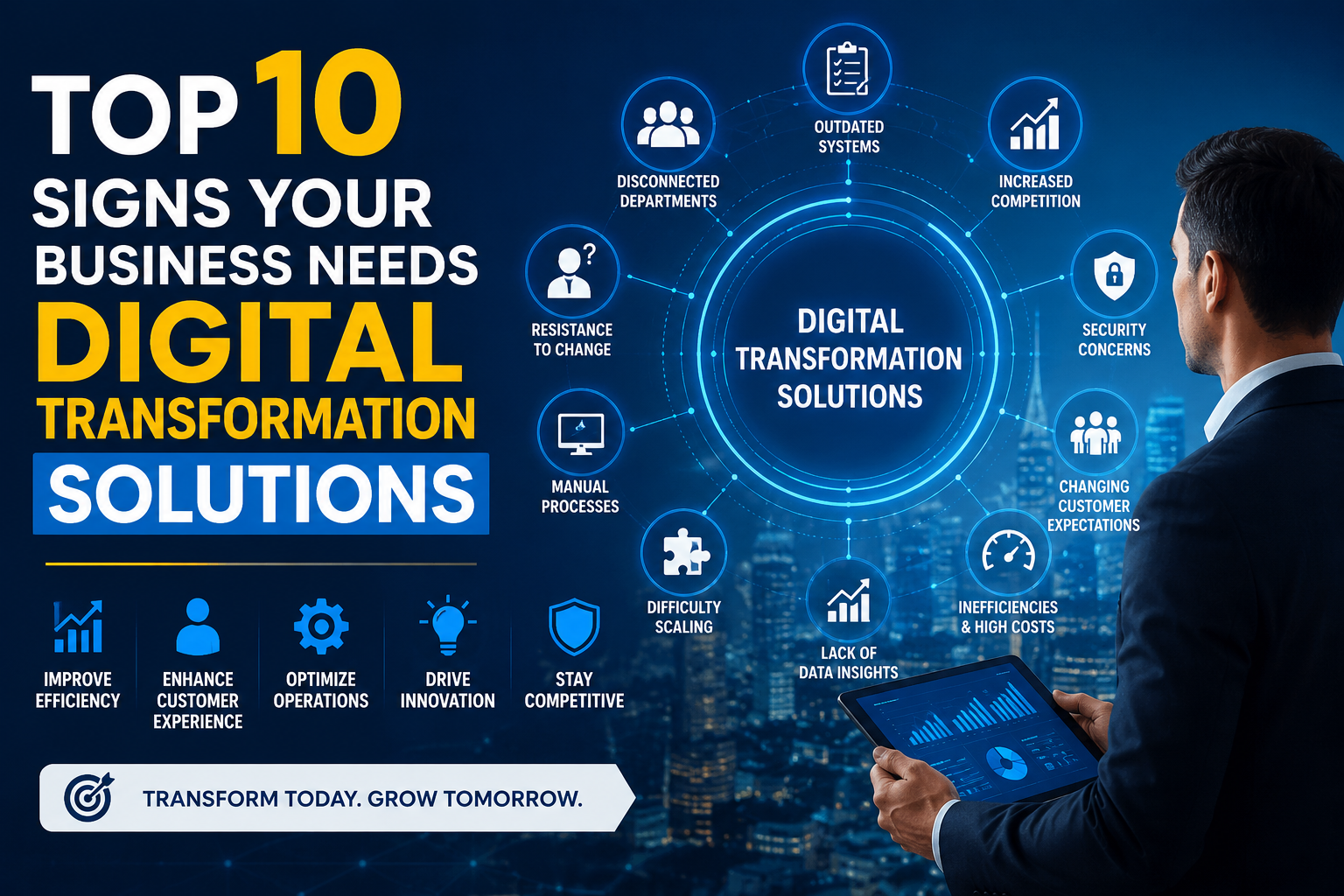

In today’s rapidly evolving business landscape, staying competitive requires more than just keeping up with industry trends. Organizations across every sector are rethinking how they operate, serve customers, and make decisions. This is where Digital Transformation Solutions become essential. By integrating modern technologies into business processes, companies can improve efficiency, reduce operational costs, enhance customer experiences, and create a foundation for long-term growth.
Many businesses assume digital transformation is only necessary for large enterprises or technology-driven organizations. However, businesses of all sizes can benefit from adopting the right digital strategies. The challenge is recognizing when your existing systems and processes are holding your business back. Ignoring these warning signs often leads to lower productivity, missed opportunities, declining customer satisfaction, and difficulty competing in an increasingly digital marketplace.
This article explores the top ten signs that indicate your business is ready for Digital Transformation Solutions and explains how embracing the right technologies can help you achieve sustainable success.
What is Digital Transformation Solutions?
Digital transformation is the process of integrating digital technologies into every aspect of a business to improve operations, customer engagement, and decision-making. Rather than simply replacing manual tasks with software, it involves redesigning workflows, improving collaboration, leveraging data, and creating more efficient business models.
Modern Digital Transformation Solutions may include cloud computing, artificial intelligence, automation, data analytics, enterprise applications, IoT, cybersecurity, and workflow management platforms. When implemented strategically, these technologies help organizations become more agile, scalable, and customer-focused.
Top 10 Signs Your Business Needs Digital Transformation Solutions
1. Your Business Still Relies on Manual Processes
One of the strongest indicators that your organization needs digital transformation is the continued dependence on manual workflows. If employees spend hours entering data, updating spreadsheets, processing paperwork, or handling repetitive administrative tasks, productivity naturally suffers.
Manual operations often increase the likelihood of human errors, create delays, and make it difficult to access accurate information. As businesses grow, these inefficiencies multiply and become expensive.
Digital Transformation Solutions automate repetitive tasks, streamline approvals, centralize information, and reduce operational bottlenecks. Employees can then focus on higher-value activities that contribute directly to business growth instead of spending valuable time on routine work.
2. Departments Operate in Silos
Many organizations struggle because different departments use separate systems that cannot communicate with each other. Sales, marketing, finance, operations, and customer support may all maintain independent records, resulting in inconsistent information and poor collaboration.
Disconnected systems slow decision-making and create unnecessary duplication of work. Employees often waste time searching for accurate information across multiple platforms.
Digital transformation integrates business applications into a connected ecosystem where information flows seamlessly across departments. Everyone gains access to real-time data, improving communication, collaboration, and operational efficiency.
3. Customer Expectations Are Increasing Faster Than Your Capabilities
Today’s customers expect quick responses, personalized experiences, self-service options, and seamless interactions across multiple channels. Businesses relying on outdated systems often struggle to meet these expectations.
Long response times, inconsistent customer support, and complicated purchasing processes can drive customers toward competitors that offer more convenient digital experiences.
Implementing Digital Transformation Solutions enables organizations to deliver faster support, personalized recommendations, automated customer service, omnichannel communication, and improved customer engagement. These enhancements build stronger relationships while increasing customer loyalty and retention.
4. Decision-Making Depends on Guesswork Instead of Data
Businesses generate valuable information every day, but without proper systems, that data often remains scattered across spreadsheets, emails, and disconnected software.
When management lacks access to accurate, real-time insights, strategic decisions become based on assumptions rather than measurable performance indicators.
Digital transformation introduces centralized dashboards, business intelligence tools, and advanced analytics that provide actionable insights into operations, customer behavior, financial performance, and market trends. Leaders gain the confidence to make informed decisions backed by reliable data.
5. Your Operational Costs Continue to Rise
If your business expenses continue increasing without corresponding improvements in productivity or revenue, outdated processes may be the underlying cause.
Manual workflows, duplicated efforts, excessive paperwork, inefficient resource allocation, and unnecessary operational delays contribute significantly to rising costs.
Digital Transformation Solutions help optimize business operations through automation, resource planning, predictive maintenance, cloud infrastructure, and intelligent process management. These improvements reduce waste while increasing operational efficiency across the organization.
6. Employees Struggle with Outdated Technology
Employee productivity is closely connected to the quality of the tools they use every day. Slow software, outdated hardware, disconnected applications, and inefficient workflows create frustration and reduce overall performance.
Modern employees expect intuitive digital tools that simplify collaboration, communication, and project management.
Digital transformation provides organizations with cloud-based collaboration platforms, integrated enterprise software, mobile accessibility, and automated workflows that improve employee satisfaction while enabling teams to work more efficiently regardless of location.
7. Your Competitors Are Innovating Faster
Markets continue evolving as businesses adopt emerging technologies to improve customer experiences and operational performance. Competitors introducing automation, artificial intelligence, digital customer engagement, and data-driven decision-making often gain a significant competitive advantage.
If your competitors consistently launch new services faster, respond to market changes more quickly, or provide better customer experiences, your organization may already be falling behind.
Digital Transformation Solutions help businesses remain competitive by enabling innovation, accelerating product development, improving responsiveness, and creating scalable business processes that support future growth.
8. Business Growth Is Becoming Difficult to Manage
Growth should create new opportunities rather than operational challenges. However, businesses relying on legacy systems often discover that expansion introduces additional complexity.
As customer numbers, employees, suppliers, and transactions increase, outdated systems struggle to handle larger workloads efficiently. This often results in slower processes, inconsistent service quality, and higher operational risks.
Digital transformation creates scalable technology infrastructure capable of supporting long-term business growth. Cloud platforms, integrated enterprise systems, and automated workflows allow organizations to expand without significantly increasing administrative complexity.
9. Cybersecurity Risks Continue to Increase
As businesses become more connected, cybersecurity becomes a critical business priority. Older software, unsupported systems, weak authentication methods, and manual security practices expose organizations to significant risks.
Cyberattacks, ransomware, phishing, and data breaches can lead to financial losses, regulatory penalties, and reputational damage.
Modern Digital Transformation Solutions incorporate advanced cybersecurity measures including multi-factor authentication, encryption, continuous monitoring, automated threat detection, identity management, and regular security updates. These technologies help organizations protect sensitive business and customer information while maintaining regulatory compliance.
10. Your Business Cannot Adapt Quickly to Market Changes
Unexpected market disruptions, changing customer preferences, new regulations, and emerging technologies require businesses to respond quickly. Organizations operating with rigid processes often struggle to adapt in time.
Businesses that cannot introduce new products efficiently, support remote work, integrate new technologies, or adjust operations quickly risk losing valuable market opportunities.
Digital transformation builds organizational agility by providing flexible technology infrastructure, cloud computing, automated workflows, and real-time business intelligence. This enables businesses to respond confidently to changing market conditions while maintaining operational continuity.
How Digital Transformation Creates Long-Term Business Value
Digital transformation is not simply about adopting new technology—it is about creating a smarter, more resilient organization. Businesses that embrace digital innovation often experience measurable improvements across multiple areas.
Operational efficiency increases as automation reduces repetitive tasks and minimizes manual errors. Customer satisfaction improves through personalized services, faster support, and seamless digital experiences. Better access to real-time data enables informed decision-making, while scalable infrastructure supports sustainable growth without unnecessary complexity.
Additionally, digital transformation strengthens collaboration between teams, enhances cybersecurity, improves regulatory compliance, and creates greater flexibility for adapting to future business challenges. These benefits position organizations to remain competitive in an increasingly digital economy.
Choosing the Right Digital Transformation Partner
Successful transformation depends not only on technology but also on selecting the right implementation partner. Every organization has unique operational requirements, existing systems, and business objectives.
An experienced technology partner begins by understanding current business processes, identifying operational challenges, and recommending customized Digital Transformation Solutions aligned with long-term goals. A well-planned implementation strategy minimizes disruption while maximizing return on investment.
The right partner also provides ongoing support, employee training, system integration, performance optimization, and continuous innovation to ensure your digital transformation delivers lasting business value.
Conclusion
Every successful business reaches a point where traditional processes are no longer enough to support future growth. Whether you’re facing inefficient operations, rising costs, disconnected systems, cybersecurity concerns, or increasing customer expectations, these challenges often indicate that it’s time to embrace Digital Transformation Solutions.
Organizations that recognize these warning signs early can modernize operations, improve customer experiences, empower employees, and build a scalable foundation for long-term success. Rather than viewing digital transformation as a one-time technology upgrade, businesses should see it as a continuous journey toward innovation, efficiency, and sustainable growth.
Investing in the right Digital Transformation Solutions today allows your business to remain competitive, adapt confidently to changing market demands, and unlock new opportunities for growth in the digital age.
Frequently Asked Questions (FAQs)
Q1. What are Digital Transformation Solutions?
Digital Transformation Solutions are technologies, strategies, and services that help businesses modernize their operations by integrating digital tools such as cloud computing, automation, artificial intelligence, data analytics, and enterprise software. These solutions improve efficiency, enhance customer experiences, and support long-term business growth.
Q2. How do I know if my business needs Digital Transformation Solutions?
If your business relies on manual processes, uses outdated software, struggles with increasing operational costs, experiences poor collaboration between departments, or finds it difficult to meet customer expectations, it may be time to invest in Digital Transformation Solutions.
Q3. What are the main benefits of Digital Transformation Solutions?
Digital Transformation Solutions help businesses streamline operations, automate repetitive tasks, improve productivity, enhance decision-making with real-time data, strengthen cybersecurity, deliver better customer experiences, and create a scalable foundation for future growth.
Q4. Can small and medium-sized businesses benefit from Digital Transformation Solutions?
Yes. Digital Transformation Solutions are valuable for businesses of all sizes. Small and medium-sized businesses can improve efficiency, reduce costs, enhance customer service, and compete more effectively by adopting the right digital technologies based on their specific needs and goals.
Q5. How long does it take to implement Digital Transformation Solutions?
The implementation timeline depends on the size of the business, existing systems, project complexity, and transformation goals. Some improvements can be achieved within a few weeks, while enterprise-wide Digital Transformation Solutions may take several months to implement successfully.