
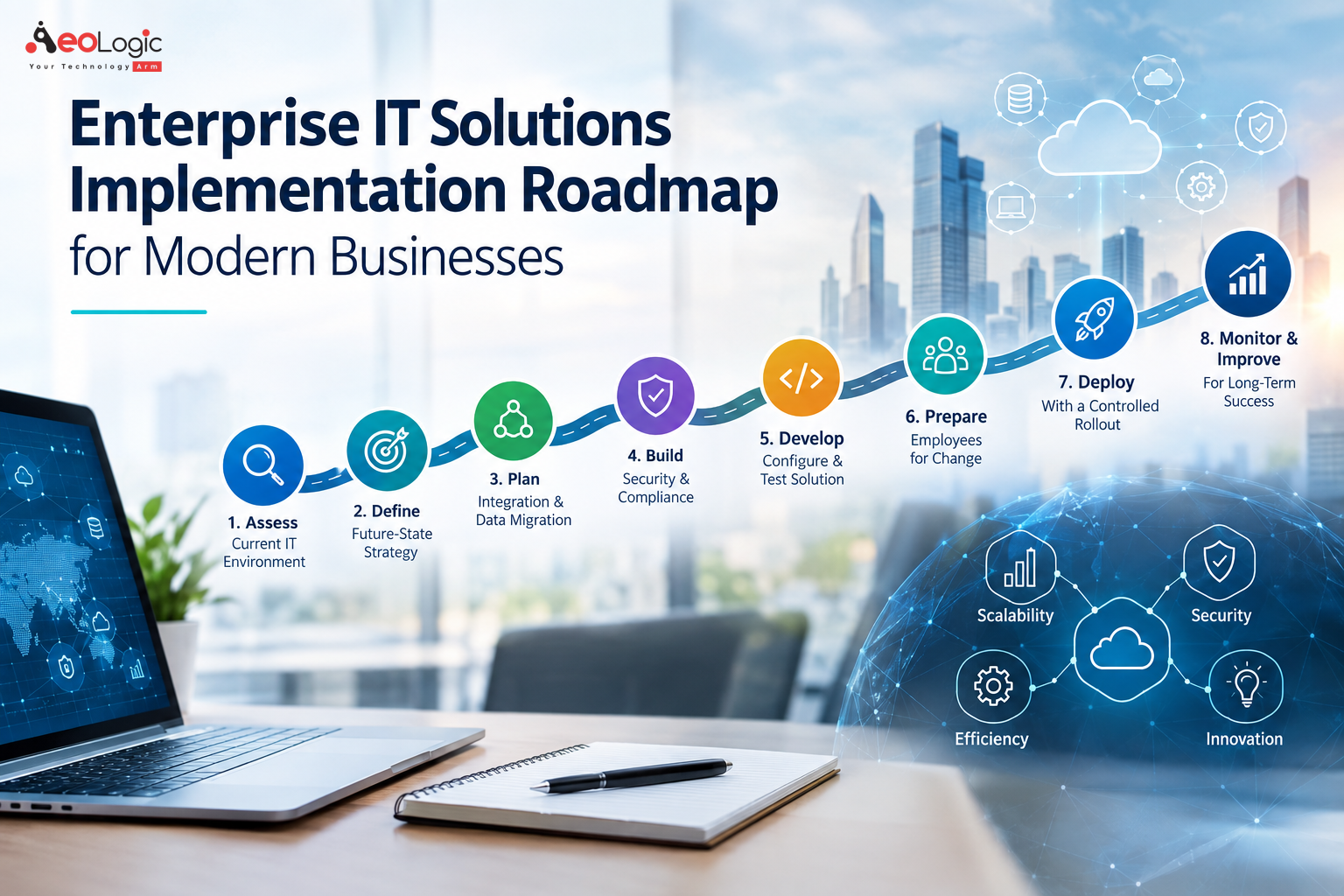

Modern businesses rely on technology not only to support daily operations but also to improve decision-making, customer experiences, security, scalability, and long-term growth. As organizations expand, disconnected applications, outdated infrastructure, fragmented data, and inefficient workflows can make technology management increasingly difficult. A structured approach is therefore essential when businesses introduce new digital capabilities or modernize their existing technology environment. Enterprise IT Solutions Implementation provides organizations with a practical framework for aligning technology investments with business objectives while reducing operational disruption and improving overall performance.
A successful technology transformation is not simply about purchasing new software or moving systems to the cloud. It requires careful planning, stakeholder alignment, infrastructure assessment, integration, data management, security preparation, testing, deployment, and continuous improvement. Businesses that approach Enterprise IT Solutions Implementation as a strategic business initiative can create a stronger technology foundation that supports changing market requirements and future innovation.
Why Businesses Need a Structured IT Implementation Roadmap
Technology environments have become increasingly complex. A modern enterprise may use enterprise resource planning platforms, customer relationship management systems, cloud applications, cybersecurity tools, analytics platforms, collaboration software, mobile applications, and specialized industry solutions. When these systems operate independently, organizations can experience duplicated data, manual processes, limited visibility, and unnecessary operational costs.
A structured roadmap helps businesses understand what needs to change, why it needs to change, and how the transformation should be carried out. It establishes a sequence for technology initiatives so organizations can prioritize critical requirements instead of attempting multiple large-scale changes simultaneously.
Enterprise IT Solutions Implementation also helps create accountability across business and technology teams. When objectives, responsibilities, timelines, risks, and performance expectations are clearly defined, decision-makers can monitor progress and address challenges before they become major implementation problems.
Phase One: Assess the Existing IT Environment
The first stage of an implementation roadmap should focus on understanding the current technology landscape. Before introducing new platforms or replacing existing systems, businesses need to evaluate their infrastructure, applications, data, integrations, security controls, workflows, and user requirements.
Identifying Technology Gaps
An IT assessment should examine whether existing systems can support current and future business requirements. Organizations may discover outdated applications, inefficient processes, unsupported technologies, integration limitations, or infrastructure constraints that affect productivity.
The assessment should also consider how employees interact with technology. A technically capable platform may still fail to deliver value if it creates unnecessary complexity for users. Understanding these challenges provides a stronger foundation for defining the future-state technology environment.
Understanding Business Priorities
Technology decisions should be connected to measurable business goals. A company focused on improving customer service may prioritize CRM integration and customer analytics, while a manufacturing organization may focus on automation, IoT connectivity, production visibility, and predictive maintenance.
Enterprise IT Solutions Implementation becomes more effective when business objectives guide technology selection rather than technology trends driving unnecessary investments.
Phase Two: Define the Future-State IT Strategy
Once the existing environment has been assessed, the next step is to establish the desired future state. This stage translates business requirements into a technology strategy that defines what the organization needs to achieve over the short and long term.
Establishing Clear Objectives
Organizations should determine the outcomes expected from the transformation. These could include reducing manual work, improving data accessibility, strengthening cybersecurity, increasing system availability, improving customer experiences, or creating a scalable technology architecture.
Clear objectives make it easier to evaluate whether implementation activities are delivering meaningful results. They also help management prioritize initiatives according to business impact and available resources.
Selecting the Right Technology Architecture
The future-state architecture should consider cloud, on-premises, hybrid, mobile, data, integration, security, and application requirements. Instead of selecting technologies in isolation, businesses should evaluate how each component will operate within the broader enterprise ecosystem.
Scalability should also remain a central consideration. Technology infrastructure that meets today’s requirements but cannot support future growth may create additional migration and replacement costs later.
Phase Three: Plan Integration and Data Migration
Modern enterprises rarely operate with a single technology platform. Integration is therefore one of the most important elements of an implementation roadmap. Applications should be capable of exchanging relevant information securely and consistently.
Connecting Business Systems
Integration between ERP, CRM, HR, finance, supply chain, e-commerce, analytics, and operational platforms can reduce data duplication and improve organizational visibility. APIs, middleware, integration platforms, and event-driven architectures can help connect applications while allowing organizations to maintain appropriate system boundaries.
During Enterprise IT Solutions Implementation, integration requirements should be documented before development begins. This helps teams identify dependencies, data flows, authentication requirements, and potential compatibility issues early in the project.
Preparing Data for Migration
Data migration requires more than transferring information from one platform to another. Businesses should identify duplicate, outdated, incomplete, or inconsistent records before migration. Data mapping and validation should be performed to ensure information remains accurate across the new environment.
A carefully managed migration process reduces the possibility of business disruption and provides users with reliable information after deployment.
Phase Four: Build Security and Compliance Into the Process
Security should not be treated as a final implementation activity. Enterprise technology environments contain sensitive operational, financial, customer, and employee information, making cybersecurity a fundamental part of implementation planning.
Establishing Security Controls
Organizations should evaluate identity management, access controls, encryption, network security, endpoint protection, monitoring, backup, and incident response requirements. Zero-trust principles can also be incorporated where appropriate to strengthen access management and reduce unnecessary exposure.
Security requirements should be aligned with the organization’s industry, regulatory environment, and risk profile. This approach helps ensure that new systems do not introduce avoidable vulnerabilities.
Supporting Compliance Requirements
Businesses operating in regulated industries may need to address specific requirements related to data protection, retention, access, auditing, and reporting. Compliance requirements should therefore be incorporated into system architecture and implementation documentation from the beginning.
Phase Five: Develop, Configure, and Test the Solution
After planning and architecture are established, implementation teams can begin configuring existing platforms or developing new capabilities. This stage should follow documented requirements and architecture decisions rather than introducing uncontrolled changes.
Testing Business Workflows
Testing should cover more than individual technical functions. Teams should evaluate complete business workflows to determine whether systems operate correctly across departments and integrated applications.
User acceptance testing is particularly important because employees can identify practical issues that may not appear during technical testing. Performance, security, integration, usability, and recovery testing should also be performed where applicable.
Enterprise IT Solutions Implementation should use testing results to identify defects, workflow gaps, integration failures, and user concerns before production deployment.
Phase Six: Prepare Employees for Change
Technology transformation affects people as much as systems. Employees need to understand how new platforms will change their daily responsibilities, workflows, and access to information.
Building User Adoption
Training should be designed around real business processes rather than generic software demonstrations. Employees should understand not only how to use a system but also why the organization is introducing it and how it supports their work.
Communication should begin before deployment and continue after launch. Feedback mechanisms can help implementation teams identify adoption barriers and improve the user experience.
Managing Organizational Change
Change management should address concerns surrounding new workflows, responsibilities, automation, and technology adoption. Leadership support can help establish confidence and reinforce the importance of the transformation.
When employees are included throughout the process, organizations can create stronger alignment between technology implementation and operational needs.
Phase Seven: Deploy With a Controlled Rollout
Deployment strategy depends on the size, complexity, and risk level of the project. Some organizations may benefit from phased implementation, while others may require a controlled pilot before expanding the solution across departments or locations.
Choosing the Right Deployment Approach
A phased rollout allows organizations to introduce capabilities gradually and learn from early implementation results. A pilot can provide valuable insight into system performance, user adoption, integration behavior, and operational impact before broader deployment.
A carefully planned Enterprise IT Solutions Implementation should also include rollback procedures, backup plans, technical support, and clearly defined responsibilities during the transition.
Phase Eight: Monitor Performance and Continuously Improve
Implementation does not end when a new system goes live. Organizations need to monitor performance, user adoption, security, system availability, operational efficiency, and business outcomes after deployment.
Measuring Business Outcomes
Key performance indicators should be established before implementation so organizations can compare expected and actual results. Depending on the project, these metrics may include processing time, operational costs, system availability, automation rates, customer response times, data accuracy, or employee productivity.
Regular reviews help management determine whether the technology is delivering its intended value and where further optimization may be required.
Creating a Continuous Improvement Cycle
Technology environments must evolve as business requirements change. New integrations, automation opportunities, security requirements, analytics capabilities, and emerging technologies may require ongoing adjustments.
Enterprise IT Solutions Implementation should therefore be viewed as an ongoing transformation journey rather than a single technology project. Continuous monitoring and optimization help organizations maintain relevance and maximize the value of their technology investments.
Common Challenges During Enterprise IT Implementation
Large-scale technology projects can face challenges related to unclear requirements, limited budgets, legacy systems, data quality, integration complexity, employee resistance, cybersecurity risks, and insufficient technical resources. Poor communication between business and IT teams can further increase project complexity.
Organizations can reduce these risks through detailed planning, realistic timelines, strong governance, stakeholder involvement, comprehensive testing, and transparent progress monitoring. External technology partners can also provide specialized expertise when internal teams require additional support for architecture, integration, development, cybersecurity, or implementation management.
Building a Future-Ready Enterprise Technology Environment
A modern IT environment needs to support both current operations and future innovation. Businesses should therefore consider flexibility, interoperability, scalability, automation, cybersecurity, data intelligence, and user experience when designing their technology roadmap.
Cloud computing, artificial intelligence, intelligent automation, advanced analytics, IoT, and API-driven architectures are increasingly becoming components of enterprise technology strategies. However, organizations should adopt these capabilities based on clear business requirements rather than implementing emerging technologies simply because they are available.
A well-designed Enterprise IT Solutions Implementation roadmap gives businesses a structured path from their current technology environment toward a more connected, secure, scalable, and intelligent enterprise ecosystem.
Conclusion
Successful technology transformation requires more than selecting the right software. It requires a structured roadmap that connects business goals with infrastructure, applications, data, integration, security, people, and measurable outcomes. By assessing the current environment, defining the future state, planning integration, protecting data, testing solutions, preparing employees, managing deployment, and continuously improving performance, organizations can reduce implementation risks and create sustainable technology value.
Enterprise IT Solutions Implementation can become a strategic foundation for modern businesses when technology decisions remain closely connected to operational priorities and long-term growth. With the right roadmap and execution strategy, enterprises can modernize their technology environments while creating the flexibility needed to respond to future business and market demands.
Frequently Asked Questions
Q1. What is Enterprise IT Solutions Implementation?
Enterprise IT Solutions Implementation is the process of planning, deploying, integrating, and optimizing technology solutions across an organization. It connects business requirements with applications, infrastructure, data, security, and workflows to improve operational efficiency and scalability.
Q2. Why is a roadmap important for Enterprise IT Solutions Implementation?
A roadmap provides a structured approach to technology transformation. It helps businesses define objectives, identify technology gaps, manage implementation risks, plan integrations, prepare employees, and measure outcomes while minimizing operational disruption.
Q3. How long does Enterprise IT Solutions Implementation take?
The implementation timeline depends on the organization’s size, technology requirements, system complexity, integration needs, data migration requirements, and deployment approach. A small implementation may take a few months, while large enterprise transformations can require significantly more time.
Q4. What challenges can businesses face during Enterprise IT Solutions Implementation?
Businesses may encounter challenges involving legacy systems, data migration, integration complexity, cybersecurity, employee adoption, budget limitations, unclear requirements, and insufficient technical resources. Proper planning, testing, communication, and change management can help address these challenges.
Q5. How can businesses measure the success of Enterprise IT Solutions Implementation?
Success can be measured through indicators such as operational efficiency, system availability, automation levels, data accuracy, user adoption, processing times, customer experience, security performance, and overall return on technology investment.